
Infinite Jump Screenshots
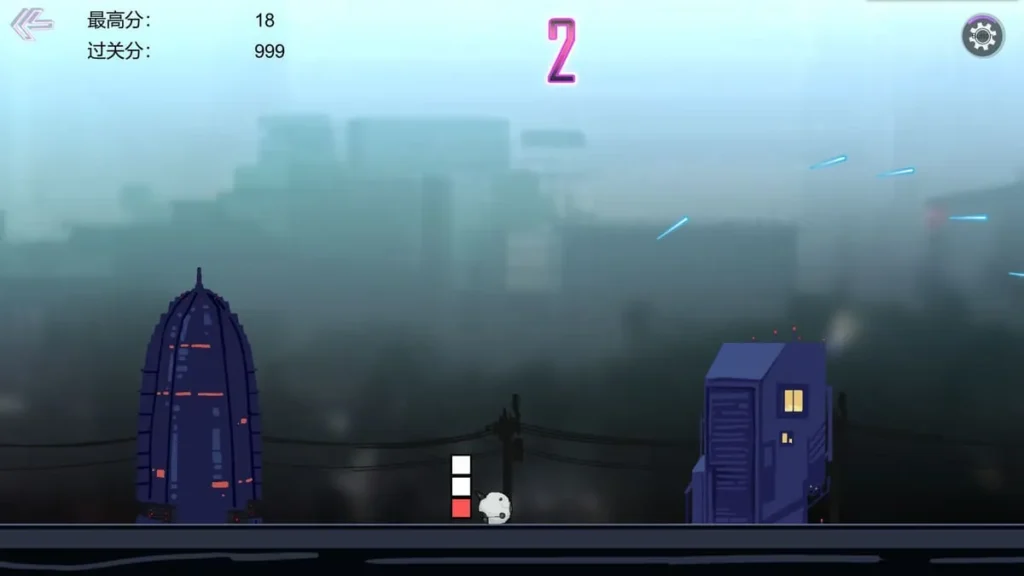
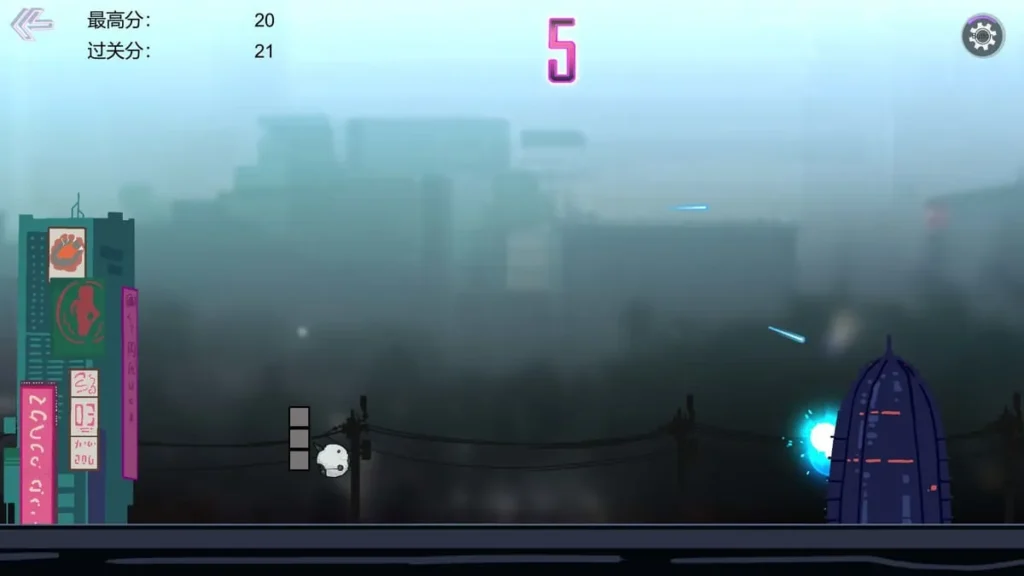

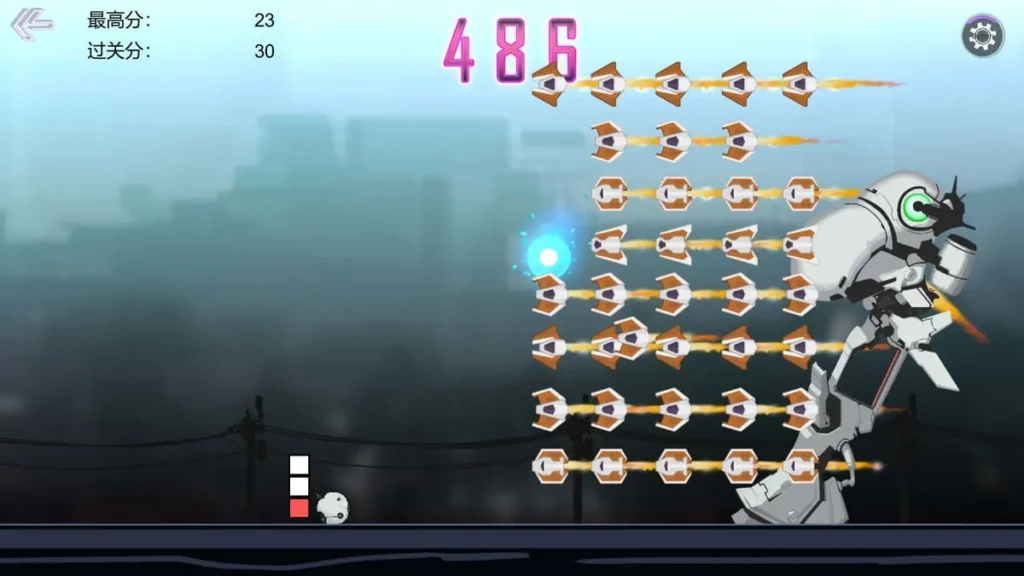


Infinite Jump review
A deep dive into momentum-based jumping, skill-based progression, and what makes this platformer uniquely challenging
Infinite Jump stands out as a distinctive blend of skill-based platforming and innovative mechanics that challenges players to master precision timing and momentum control. This game combines fast-paced acrobatic gameplay with progressively challenging obstacle courses, rewarding players who develop mastery over its fluid movement system. Whether you’re a casual gamer exploring new titles or a platforming enthusiast seeking your next challenge, Infinite Jump delivers an experience that demands both technical skill and strategic thinking. The game’s unique approach to jumping physics and combo systems creates a memorable experience that sets it apart from traditional platformers. Understanding the core mechanics and progression systems is essential for anyone looking to excel in this demanding title.
Core Gameplay Mechanics: Understanding Momentum-Based Jumping
Ever had that moment in a game where you feel completely in sync with your character? Where every leap isn’t just a button press, but an extension of your own will, a fluid dance of speed and direction? That’s the exact sensation Infinite Jump engineers from your very first sprint. 🏃♂️💨
Forget everything you know about static, predictable hops. This game throws out the old playbook and builds its entire world on a foundation of velocity-based jumping. It’s not just a platformer; it’s a physics playground where your momentum is your most powerful tool—and your greatest responsibility. Let’s pull back the curtain on the core platformer mechanics that make mastering this world so uniquely thrilling.
How Momentum-Based Jumping Physics Work
At the heart of Infinite Jump lies a simple, yet transformative idea: your jumps are not pre-programmed arcs. They are a direct, physical consequence of everything you’re doing in the exact moment you leave the ground. This is the essence of its momentum-based jumping physics.
Here’s how it breaks down. In most classic platformers, when you hit the jump button, you’re essentially triggering a fixed animation. You’ll always rise and fall at the same rates, covering a predictable distance. It’s reliable, but it’s also limiting. Infinite Jump ditches that model entirely. Instead, your character’s existing horizontal speed is baked into the jump itself. If you’re standing still and jump, you’ll go straight up and down. But if you’re sprinting to the right at full tilt and launch yourself? You’ll soar. 😲
That horizontal velocity carries through, turning a simple hop into a graceful, far-reaching arc. This platformer physics system means every approach matters. Need to clear a massive chasm? You’d better get a running start. Navigating tight, delicate platforms over a spike pit? Maybe a gentle tap of the direction pad from a near-standstill is the wiser choice. The game constantly asks you to read the terrain and manage your speed.
But the real magic—and the real skill ceiling—comes from mid-air control. You are not a passenger once you’re airborne. The game’s velocity-based jumping model allows you to subtly steer. Pushing against your direction of travel will slow your horizontal momentum, letting you fine-tune your landing. Conversely, adding a burst of speed in mid-air can stretch a jump just that crucial few pixels further. It creates a sublime sense of fluidity and direct connection; you’re not inputting commands, you’re applying forces.
Pro Tip: Mastering this feel is everything. Spend time in the early zones just experimenting. Run, slide, jump, and actively fight or add to your momentum mid-air. Notice how your trajectory bends. This tactile understanding is your foundation for everything to come.
Let’s paint a picture with a real gameplay scenario. Imagine you’re racing down a sloping corridor, building up tremendous speed. A gap appears, followed by a small, moving platform. With traditional platformer mechanics, you’d need to time a jump from the exact edge. In Infinite Jump, you can jump a little before the edge. Your stored velocity will catapult you across the gap effortlessly. Now, you see the platform is drifting left. While in your long, fast arc, you gently nudge the control stick left to match its drift and stick the landing perfectly. That sequence—planning, using momentum, and correcting in-flight—is the core gameplay loop. It’s what makes the movement feel less like a series of actions and more like a single, flowing thought.
To really cement the difference, let’s look at how this system stands apart from what came before.
| Jump Type | Velocity Carry-Over | Mid-Air Control | Player Skill Impact |
|---|---|---|---|
| Traditional Fixed-Arc | None or Minimal. Jump distance/height is consistent. | Very Limited. Often just a slight “float” or fixed double-jump. | Low. Mastery is about memorizing jump timing from set positions. |
| Infinite Jump Momentum-Based | Complete. Horizontal speed directly converts to jump distance. | High & Continuous. You can accelerate, decelerate, and steer throughout the arc. | Extreme. Mastery requires managing run-up speed, in-air adjustments, and landing precision simultaneously. |
This momentum-based jumping physics approach transforms the landscape from a static stage into a dynamic equation. You’re not just reacting to the environment; you’re conversing with it through the language of motion. 🧮➡️🎯
The Jump Combo System and Score Multipliers
So, you’ve started to get a feel for flowing through the world. But Infinite Jump isn’t just about getting from point A to point B. It’s about doing it with style, efficiency, and breathtaking audacity. This is where the brilliant jump combo system comes into play, elevating skilled movement from a means of travel to a thrilling, high-risk, high-reward spectacle. ✨
The rule is beautifully simple, yet opens up infinite complexity: your combo counter increases every time you touch a surface without touching the ground first. It’s not just about chaining jumps from one platform to the next. We’re talking platforms, walls, the tops of enemies, moving hazards, even certain projectiles—if you can bounce off it, it counts. The ground (or deadly hazards) are the only combo-breakers.
This single rule reframes the entire game world. A wall isn’t an obstacle; it’s a launchpad. A series of tiny, spinning blades isn’t just a threat; it’s a potential combo factory for the brave and precise. The jump combo system encourages you to see pathways where none seem to exist. Why take the safe, lower route when you could wall-run, leap to an enemy, bounce off its head to a distant platform, and then slide down another wall to keep the chain alive?
As your combo climbs, two key things happen:
1. Score Multiplier: Your score for each subsequent action is multiplied by your combo count. A simple jump might be worth 100 points. That same jump as part of a 10x combo? 1,000 points. This turns high-level play into a scoring frenzy, where master players chase leaderboard dominance by planning incredibly risky, long chains across entire levels.
2. Visual & Audio Flair: The game celebrates your skill. Screen effects become more vibrant, the camera might add a slight dramatic zoom on tight landings, and the sound design layers in more intense musical cues and satisfying “click” sounds with each new link in the chain. A high combo doesn’t just feel rewarding; it looks and sounds epic. 🎶🔥
But here’s the genius part: this system isn’t just for showboating. The jump combo system is often the key to reaching hidden areas. Developers have cleverly placed secret rooms, collectibles, and alternate paths that are only accessible by maintaining a minimum combo count to reach a far-away ledge or to trigger a sequence of moving platforms. It perfectly marries the game’s core skill (momentum-based movement) with its progression and exploration. You’re not just finding secrets because you looked in a corner; you’re earning them through demonstrated mastery of the game’s platformer mechanics.
I remember the first time I stumbled upon this. I was in the “Neon Canopy” zone, faced with a sheer cliff face with seemingly no way up. The intended path went around. But on a whim, I bounced between two close-set walls (a “wall climb”) to gain height, then at the peak, spotted a distant, glowing platform. It was too far for a single jump. I had to immediately leap to a patrolling drone, bounce off it to redirect my momentum upward and forward, and then desperately lunge for the glow. Making that three-part combo and landing on that secret platform, unlocking the “Wall Runner” achievement, was a pure gaming euphoria. It was the game telling me, “You understand the rules. Now go play with them.”
Collision Detection and Precision Platforming
All this talk of flowing momentum and insane combo chains rests on one non-negotiable foundation: absolute, unwavering trust. You need to trust that when you aim for a pixel, you hit that pixel. When you brush a wall, you stick to it predictably. This is where Infinite Jump’s commitment to technical excellence shines through its collision detection platformer design. 🎯
In a game demanding precision platforming, sloppy or inconsistent hitboxes are a death sentence—literally and for player enjoyment. Infinite Jump employs a pixel-perfect, or more accurately, vector-perfect detection system. Every wall, every platform corner, every spinning blade’s hurtbox is defined with meticulous accuracy. This means your character’s trajectory isn’t subject to ambiguous “maybe” collisions. The rules are clear, consistent, and immediate.
This precision enables the game’s most demanding challenges. When you’re threading a needle through a gauntlet of moving saws, you’re doing so with the confidence that a graze that looks like it should have hit you won’t, and a landing that looks like it should be safe will be. This fairness is paramount. The challenge in Infinite Jump never comes from fighting its controls or guessing its collision. The challenge is entirely you versus the obstacle course, with the game’s systems as a perfectly reliable intermediary.
Let’s detail how different elements react:
* Platforms: Ledges are crisp. You can land on the very edge, and your character’s pivot point will align exactly. There’s no “magnetizing” to the center, allowing for those heart-stopping, one-pixel landings that keep a combo alive.
* Walls: Collision isn’t just a solid block. The game understands slides, grabs, and kicks. Your transition from running into a wall to sliding down it is seamless, and your ability to kick off is always available at the exact moment you input the jump command, creating that essential rhythm for wall-climbing sections.
* Moving Hazards & Enemies: Their hurtboxes move and rotate with their animations flawlessly. This allows for the advanced technique of “frame-perfect” bouncing, where players use the very edge of a rotating gear or the brief safe spot on an enemy’s attack cycle as a combo stepping stone. This level of collision detection platformer fidelity is what separates a good platformer from a legendary one.
This synergy is what creates the true precision platforming soul of the game. The momentum-based jumping physics give you the fluid, powerful toolset. The jump combo system gives you a compelling reason to use it recklessly. And the rock-solid collision detection gives you the confidence to attempt it all. You’re free to focus entirely on execution, on reading the flow, on building speed, and on taking those leap-of-faith bounces because the game world will respond with mathematical honesty.
Mastering Infinite Jump, therefore, isn’t just about learning level layouts. It’s about internalizing a platformer physics system so completely that you move on instinct. It’s about seeing a chaotic screen of hazards and visualizing a single, graceful line of momentum through it all—a line built from running jumps, wall rebounds, and enemy stomps, held together by unshakable trust in every pixel beneath your feet. That’s the unique challenge. That’s the mastery. And that’s the endless thrill of the jump.
Infinite Jump represents a compelling evolution in platformer design, successfully merging accessible one-button controls with sophisticated momentum-based physics that reward genuine skill development. The game’s progressive difficulty system, combined with its skill-based reward structure, creates an experience that respects player investment and delivers satisfaction through demonstrated mastery rather than randomized loot. From the fluid jumping mechanics and precise collision detection to the neon-lit aesthetic and character collection system, every element works cohesively to create a platformer that challenges both casual gamers and platforming enthusiasts. Whether you’re drawn to the technical precision required to master momentum-based jumping, the visual progression of unlocking new characters, or the immersive atmosphere of its dystopian worlds, Infinite Jump offers a unique gaming experience that stands apart from traditional platformers. For players seeking a genuine challenge that rewards skill, timing, and perseverance, diving into Infinite Jump’s demanding obstacle courses promises hours of engaging gameplay and the satisfaction of continuous improvement.